Tuesday, August 20, 2013

Cardio Designed to Actually Burn Fat


Albert Park Lake and the Tan are great running tracks for scenery but the way most people run (or shuffle) them is not really doing their fat loss or joints any good.

There is an actual sequence you can use for your cardio training that can ensure that you burn actual body fat and not just muscle, water or basic calories.

It's pretty easy to follow too.

Step 1 - Perform some basic interval training for 5 - 6 cycles.
Step 2 - Perform some active rest x 5mins
Step 3 - Perform some steady state aerobic training x 15 - 20mins

Like I said - easy.

Why does this work and my regular stuff doesn't? Glad you asked.

Step 1 - The interval training portion is designed to break fat away from your fat cells which means that you actually need to do this bit properly for the rest of it to work. Choose some basic interval set up like 30 seconds as hard as you can then 90 seconds at a half pace or 60 seconds hard with 120 seconds half pace. This also requires perfect adherence to a lpre workout ow carbohydrate nutritional plan.

Step 2 - The active rest portion lets the fat cells that have been broken away to move into the blood stream so make it a walking pace, either brisk or normal, for the 5 minutes.

Step 3 - The steady state cardio portion now utilises the released fat in the blood stream for energy so make it a 6 - 7 out of 10 effort level because if it's too fast then you'll go back into the step 1 of breaking the fat away but not actually burning it where it just reattaches back to the cell later.

If you can't run then you can use this for any cardio exercise mode you like. You could also use resistance exercises for the intervals. For example if you're doing 60 seconds on with 120 seconds off then 60 seconds of push ups is too much for most people so 30 seconds of push ups as hard and as fast as you can then break into some squat jumps x 30 seconds to make up the 60 second interval period.

And there you have it - fat burnt!!

Monday, August 12, 2013

What Your Resting Heart Rate Says about You


About couple of months ago I started taking my heart rate first thing in the morning and writing it down. I'd take my wrist site pulse for 30 seconds, double it and wholla - you've got your resting heart rate!

So why would you do this?

Our nervous system has 3 different sub-systems:
  1. Central Nervous System (the brain)
  2. Peripheral Nervous System (outside the brain and spinal chord)
  3. Autonomic Nervous System (nerves and ganglia)
Right now we're goin to focus on the autonomic nervous system that has 2 parts to it eing:
  1. Parasympathetic
  2. Sympathetic
Ideally you want to be able to easily swing between these systems depending on the stress you encounter at that specific point in time. 

The paraympathetic nervous system is your chilled out, rauncho relaxo system while your sympathetic nervous system is your anxious, toned up (not in a good way), fight or flight system.

If your resting heart rate consistently above 60 beats per minute then you're sympathetic nervous system dominant.

This can spell trouble because the body feels and acts like it is under constant threat and stress resulting in broken sleep, poor recovery and fat storage from being in a state of "emergency" 24/7.

So you can see it's not just a matter of improving your fitness level, it's a matter of lifestyle.

It is crucial to your long term health if you can pin point some actions that you can put in place easily to combat when times are tough.

So for example if you take your heart rate and it's 3 or more beats above your daily average resting heart rate, then you know you're body is working overtime!

It might be best to make some time to get outside for a walk before work or at lunchtime.

Don't take work home with you.

Get to the gym.

Hit the road.

Get your cardi on and take in a movie.

Even better, hit us up for a be activated treatment session, that helps the body to get back to baseline, essentially resetting your body!

Take your resting heart rate every morning upon waking for 2 weeks and let us know where you're at!

Wednesday, July 31, 2013

Spring into Summer in August

Look ahead at your calendar.
Footy Finals? Tick
School Holidays? Tick
Spring Carnival? Tick
Birthday month of yours truly resulting in plenty of present searching from all of his adoring fans?
All those ticks are pretty much points to events that can derail your health and fitness plan.
September is my biggest month of the year. I’m a footy tragic so finals time is pretty much heaven for me resulting in grand final day which actually falls on my birthday every 5 years or so. And to be honest there’s no holding back grand final day – the greatest day of the year!!
If you fall into this same category as myself then August is a pretty important month for you leading into the sunnier and warmer months. It is the perfect month to get yourself organised exercise and nutrition wise and to build the required momentum to bust through September like it’s, well, August!
So as soon as you finish reading this blog post, open up a word document and list what you’re going to do for the month of August.
Hit the gym twice a week minimum, sprint the running track once a week and bomb the swimming the pool once a week too. Hit the supermarket and load up on lean meat, eggs and veggies to put in the fridge or freezer. Maybe make this the month you eat all your meals at home, or at least prepare all of your own meals.
Start building momentum and start building today or you’ll hit that first ball-burster of a day in September and wish you could wear that sleeveless number you bought and realise that for mankind’s sake, you probably shouldn't!

Thursday, July 25, 2013

Guest Post from an Actual Client

One of my tough-as-nails clients also doubles as my "social media chick", or my SMC.

She's the reason why this blog is finally being updated regularly and that our Facebook page has a far greater presence then it ever has.

She also has her own blog is a bit of a Seinfeld type set up in that is about nothing in particular but her latest post is a ripper!!

Titled "10 Reasons Why Small Group PT Can Help You Achieve Your Health and Fitness Goals", it won't win any prizes in the short title group but should light a tiny but skin burning inducing flame under you to take the plunge.

Here it is:

http://whatjanesaysandblogs.blogspot.com.au/2013/07/ten-reasons-small-group-personal.html

And here's a video I found this morning on my Facebook page that everyone should watch and do:


Tuesday, July 16, 2013

You’ve Got to Progress to Well.....Progress


To lose body fat, to get stronger, to gain muscle mass or to transform yourself from a chubby-chain smoking-cricketer to Hollywood-wannabe requires the use of progressive overload. 


This means that over time the body needs to be exposed to more training volume, intensity, stress, and in Warney's case botox and teeth whitener, to keep making progress towards your given goal.

For strength initially it’s simply a matter of always increasing the load that you put on the bar in a progressive matter. 

For example if you did 3 sets of squats with 10kgs for 8 reps this week, then next week move up to the next dumbbell (12.5kgs) and go for 8 reps again. 

Once you reach a certain relative load then progress will be slower but with correct programming you can still see consistent strength gains after the burst of 'newbie' gains.

For example you'll sooner or later reach a load for the squats where you can't reach 8 reps. It might take 4 weeks of 14 weeks but you'll find it. 

At this point you have a few ways you can go but the simplest way to go from there is to set a rep range for each set.

As our goal rep weight is 8 then we'll choose a rep or 2 either side of that such as 6 - 10 and then your new goal is to do 3 sets of at least 6 reps but stopping at 10 reps.

Once you get 3 sets of 10 then you increase the weight and go again.

To gain muscle mass you need to increase actual tension and stress on the muscle plus an increase in your calorie intake. 

As muscle mass increases then so will calorie requirements because the more muscle you possess the more calories are required to fuel everyday activities. 

Placing tension and stress on a muscle can be achieved more ways than it matters to count but again it needs to be progressive in its programming, you can’t just go straight to the highest stress method because how do you progress after that?

To progress tension/stress you might use a particular weight and increase the reps you do with it like you used for strength above but with a higher amount of reps per sets, say 8 - 15. 

You might just make a set longer by using a slower eccentric phase (lowering the weight in a squat for example) or extend the sets with the use of partial reps or isometric holds after you've reached your prescribed rep target.

For calorie intake you'll need to know all the what, when and how's of calories which I'll post about next week.

For fat loss your progressive overload will come in a few different forms depending on where you are currently.

For training, beginners will be best served by improving their work capacity for the ability to train at a higher volume. 

So you might do your 3 sets of 10 @ 12.5kgs for squats this week which brings your rep total 30 (3 x 10) or your work total to 375kgs (30 x 12.5).

So next week you can either increase the rep total and do more then 30 reps with the 12.5kgs weight or you can look at doing more total work by less overall reps but with a higher weight (15kgs).

Once you have attained the work capacity to train with relatively high volume, then you can move towards a density approach.

The density approach can be done 2 ways. 
  • FIRST - more work in the same time
  • SECOND - same work in less time
For the first method you might bodyweight squats and push ups back to back to back for 5 minutes counting the total reps you manage to do in that 5 minutes. Next week you keep the time the same and aim to get more reps then last week.

For the second method you might set out to do 10 x 10 for push ups and bodyweight squats alternating exercises again non stop and seeing how long it takes you to do it. Next week you keep the 10 sets of 10 reps and try and beat your time.

Either way there is progressive overload in each and every session.


So if you're exercising away doing the same thing week in and week out and nothing is really happening, then just remember the definition of insanity – doing the same thing and expecting a different result. 

Wednesday, July 10, 2013

Here Comes the Water Works!!


8 glasses a day. 2 litres a day. 3 litres a day. Make up your kind already, how much do I need?

I’m not going to say to have this much water everyday but I want you to do is just increase your intake. Just have more more water, pretty simple.

Dehydration can cause a host of problems including irritability, loss strength, lack of focus and also joint lubrication.

Probably the best part of increasing water means that there will be less other "stuff" going in your body. 

If you’re thirsty then reach for the water bottle on your desk rather than a soft drink, coffee or juice. 

If you find yourself getting hungry than opt for a quick glass of water first as it may mean you were just dehydrated (dehydration can be disguised as hunger), instead of that piece of cake, biscuit or bagel in the office kitchen.

Another trick to do is to buy 3 – 5 different sized drink bottles and have 2 – 3 refills of the first size for 1 full week. 

Next week have the same amount of refills for the second sized bottle and work up to the biggest bottle each week.

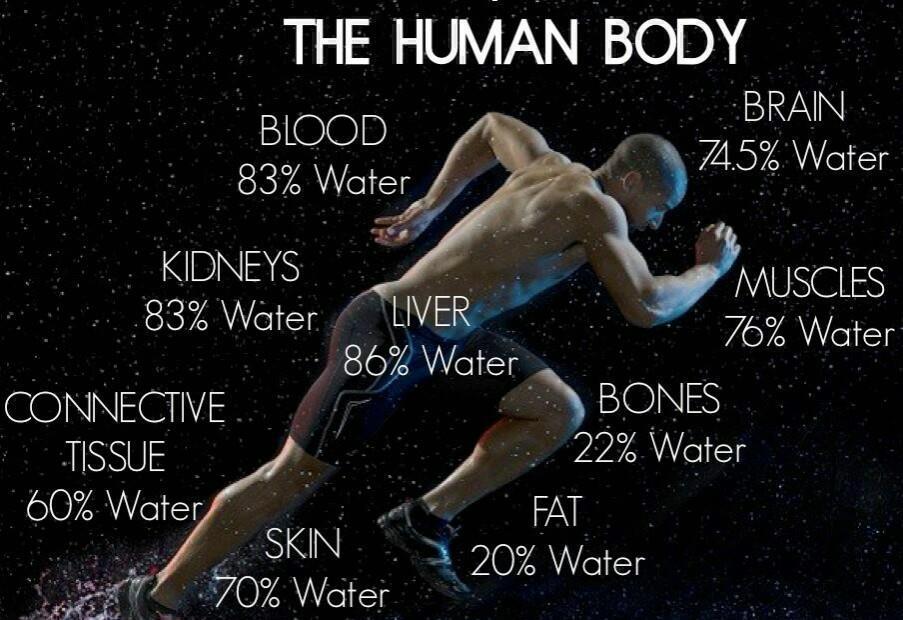
The body is 70% water, just like you've heard all these years so if you aren't getting enough of it then you're not really looking after yourself are you?

Tuesday, July 2, 2013

Training Intensity Trumps Everything


We’ve all seen the gym goers doing cardio while they're reading newspapers and watching the TV’s in the big chain gyms, training at an intensity that a sloth would be embarrassed about. 

 
But why do they do it?

 
My guess is as good as yours but my hunch would be they are part of the “more is better” team that regards exercise duration as the gold standard. In the words of Chandler, could they be any more wrong?


The biggest issue with long duration exercise is that the longer it goes, the lesser intensity you actually train at. You can train hard, but you can’t train hard for long.

Long duration exercise burns about 95% of its calories while you do it meaning to burn more calories and to burn that extra layer of belly fat means that you’ve actually got to run further and further each time making it longer and longer to complete.

I’m not sure how long you can stretch out your lunch break without your boss catching on but I think it’s best not to even test it.


Intensity refers to a relative level of your maximum output. So if you’re going at about a 7 out of 10 on your effort level scale then that would be about 70% intensity.


The absolute top notch reason to focus on intensity is the metabolism boost you get after high intensity training; where it can stay elevated for up to 33 hours post training. As well as promoting muscle mass increases and the actual breakdown of fatty acids (body fat).


So for the next 3 to 4 weeks try this training plug in instead of those endless Tan runs and 60 minute cardio machine sessions:

AM – Hill Sprints


Find a hill, any old hill, and run up it as fast as you can for 20 – 30 meters. Walk down, have a quick sip of your drink and repeat 5 times increasing 1 rep every week


PM – Step Burpees

In the confines of your own home do Burpees as hard and as fast as you can (but maintain technique) for 30 seconds then rest for 30 seconds. Start off with 3 rounds and increase to 4, 5, 6 each successive week. 

Add up the total reps you get each workout and beat it each session too.


So there you have it, 2 much shorter but more effective sessions that can fit into anyone’s day.


Intensify your intent!!